
Wrongful Death Cases

Death cases are difficult for many of the people affected by them. The loss of a loved one’s income and no longer having that special person in you life are difficult …

Criminal Defense Cases

If the police are investigating or have arrested you, then you may need an attorney. Many times, an attorney can help you by presenting facts to the police or State Attorney’s …

Dog Bite Cases

Has a dog bitten you or a loved one? Even a tiny dog? In Florida, dog owners are almost strictly liable when a dog bites someone at their house, and if …

Comparative Negligence: Do You Know What It Means?

Florida is a “pure comparative negligence state” that allows someone who has been due injured to the negligence of another person even though the injured person is also partially at-fault. What …

My Car Is A Total Loss! Now What?

Total Losses: an Overview Few things frustrate insurance customers more than when their vehicles have been destroyed in a crash. Since most cars typically do not increase in value as they …

How Much Is My Injury Worth?

Personal injury clients are usually curious about how much money an attorney can get for them. While there are no firm answers to that pesky question, there are generally two principles …

Slip & Fall Cases

Slip and fall cases in Florida are very difficult to prove. Here is what the statute says: Premises liability for transitory foreign substances in a business establishment.— (1) If a person slips …

Comparative Fault in Texas Car Accident Cases — How It Affects Your Compensation

How Proportionate Comparative Fault Works in Car Accident Cases

When a car accident involves more than one driver who contributed to the crash, the question isn’t simply who was at fault — it’s how much fault each party bears. The legal framework that governs this analysis is called comparative fault, and understanding how it works is essential for any Texas accident victim who wants to know what compensation they may be entitled to. For more detailed information on how these rules apply to specific accident types, New Braunfels car accident resources are available.

Texas follows a modified comparative fault system with a 51% bar. Under this rule, an injured party can recover damages as long as their share of fault for the accident does not exceed 50%. Once their fault reaches 51% or more, they are barred from any recovery. For those who fall below the 51% threshold, their compensation is reduced proportionally by their percentage of fault. So if a victim is found 20% at fault and their total damages are $100,000, they recover $80,000.

Some other states apply a 50% bar — meaning a party who is exactly 50% at fault is barred from recovery. Under that stricter standard, only parties who are less than 50% responsible can collect. The practical difference is narrow but meaningful in close cases where fault is nearly evenly split between two parties.

A Simple Example of How Fault Percentages Work

Consider two drivers backing out of adjacent parking spaces simultaneously, neither paying adequate attention. Both contribute equally to the resulting collision. In a 50% bar state, neither would be eligible for compensation — both are precisely 50% at fault. In Texas, under the 51% bar, the same outcome applies: both are 50% at fault, which is below the 51% cutoff, meaning each could theoretically pursue the other — but each recovery would be reduced by 50%, leaving both with half of their damages from the other party’s insurance.

In practice, evenly split fault cases are among the most contested, because the difference between 49% and 51% is the difference between recovering something and recovering nothing.

How Is the Percentage of Fault Determined?

Fault percentages are not calculated through a fixed mathematical formula. They are determined through negotiation and, if necessary, litigation. Immediately following an accident, the insurance company’s claims adjuster begins evaluating the circumstances surrounding the crash to assign relative degrees of responsibility to each party. That assessment considers police reports, witness statements, photographs, traffic laws, road conditions, and any other relevant evidence.

The adjuster’s initial fault allocation is not final, and it is not neutral. Insurance companies have a financial incentive to assign as much fault as possible to the injured party — because every percentage point of fault they can attribute to you reduces what they owe. A claimant handling this process without legal representation is at a significant disadvantage.

An experienced personal injury attorney who understands fault in accident cases will challenge the adjuster’s allocation, present evidence that supports a lower fault percentage for their client, and negotiate from a position of knowledge. If the parties cannot reach an agreement on fault, the matter proceeds to court — where a judge or jury makes the final determination.

No-Fault Coverage and Personal Injury Protection (PIP)

Not every accident claim is governed by fault-based analysis. Many insurance policies include Personal Injury Protection (PIP) coverage — also called No-Fault coverage — which pays for medical expenses and lost wages regardless of who caused the accident. If you carry PIP coverage and are injured in a crash that was primarily your fault, your own insurance company pays your covered expenses up to your policy limit, without requiring you to prove that the other driver was responsible.

This type of coverage also applies to personal injury expenses incurred as a passenger in someone else’s vehicle, or in certain pedestrian accident situations. PIP coverage allows claims to be processed faster and with less dispute than fault-based claims, because the triggering event is the injury itself, not the determination of who caused it.

Whether you can pursue additional compensation beyond your PIP limits against the at-fault driver depends on the specific facts of your accident and the laws applicable to your situation. In Texas, drivers are required to be offered PIP coverage when purchasing auto insurance, though they may reject it in writing. Knowing what coverage you carry — and what it entitles you to — is an important part of understanding your options after any crash.

Uninsured and Underinsured Motorist Coverage

Another important layer of protection in the fault framework is Uninsured/Underinsured Motorist (UM/UIM) coverage. When the at-fault driver has no insurance, or carries only minimum coverage that falls short of covering your full damages, UM/UIM coverage allows you to recover the remainder from your own policy. This protection applies even when you are entirely without fault — the problem is simply that the responsible driver cannot cover what they owe.

UM/UIM coverage also protects victims in hit-and-run accidents, where the at-fault driver cannot be identified or located, as well as accidents involving stolen vehicles where the authorized policy does not apply.

Why Fault Allocation Is the Most Contested Issue in Many Claims

In cases where liability is disputed, the percentage of fault assigned to each party is often the single most consequential determination in the entire claim. A shift of even 10 or 15 percentage points can result in tens of thousands of dollars of difference in what the injured party recovers. Insurance adjusters know this — and experienced personal injury attorneys know it too.

If you have been seriously injured in an accident, the fault percentage assigned to you — and the strategy used to challenge or defend that assignment — directly determines what you recover. Getting the analysis right, with the help of an attorney who understands Texas comparative fault law and insurance company tactics, is one of the most important steps toward a fair outcome.
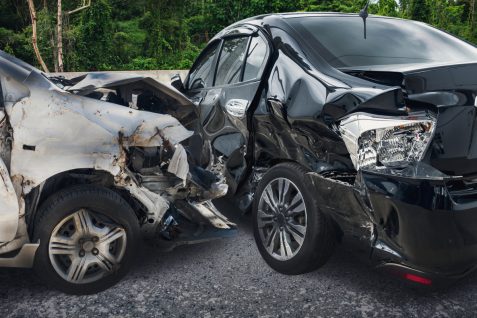
My Car Is A Total Loss! Now What?

Total Losses: an Overview
Few things frustrate insurance customers more than when their vehicles have been destroyed in a crash. Since most cars typically do not increase in value as they age, the person who has had an insurance company declare a car a “total loss” may have unrealistic expectations of what the insurance company owes for a total loss. Many people mistakenly believe that the insurance company owes them a new car. That is usually not the case.

What an insurance company is supposed to do is put you back into the same financial situation you were in before the crash, and whether you still owe five dollars or $5000 on your car’s loan means absolutely nothing to an adjuster, yet that too is one of the things that adjusters frequently hear: “I still owe $5000 on this car!” (It doesn’t matter.)

This guide will discuss some of the issues you can expect to encounter if an insurance company “totals” your car.

What is a Total Toss?
There are two types of total losses in the insurance industry:

The economic total loss. This is when the cost to repair your vehicle is more expensive than it is to merely pay for its actual market value (“ACV”). ACV is the price reputable dealers in your geographic area would charge for a car of the same make, model, and condition with all its options.
The structural total loss. This is a vehicle that is simply unsafe to repair. An insurance company does not want to put a vehicle back on the road that has been cobbled together due to fear of another party suing the insurance company because the unsafe vehicle caused a crash.
In almost all cases, if an insurance company declares your car a total loss, then you must surrender the car’s title and its “salvage”—the car itself—for parts. There are some exceptions to that, but we will discuss them later.

The Process
When your car is involved in a crash, an insurance adjuster will perform or approve an estimate. If it costs more to repair your vehicle than it’s worth, then the adjuster will seek permission to declare the car a total loss. Usually, a supervisor will have to approve the adjuster’s decision.

The adjuster will usually use software to determine your car’s value. NADA is the biggest supplier of that software. The software is supposed to be updated each month to account for fluctuations within the market, and if the adjuster doesn’t perform those updates, the value could be incorrect. Some non-subscription sites—NADA has one too—can get you close to that value. I recommend visiting three such sites to get an overall idea of what your car is worth.

The adjuster should take into account your car’s mileage, options, and its general condition. Adjusters sometimes miss options (or add options that aren’t on the car!), and these mistakes can either subtract or add value to your car.

The adjuster will compare the value of your car to its cost of repair. If the repairs cost more 80% or more of the car’s value, then in my experience, the adjuster will “total” the car. That’s because the initial estimate is always low. Once the damaged parts are removed, there is usually hidden damage.

If your car is what’s called an “obvious total loss,” meaning it has severe damage, then the adjuster will total it. Flood claims in which cars become totally submerged are one such type of obvious total loss. So are fires that engulf the engine compartment. I’ve seen cars that were little more than scattered pieces of twisted metal. The adjuster isn’t going to spend a lot of time writing that estimate. We called such cars “gas cap estimates.” In other words, the only good part left was the gas cap, so you just put that gas cap on another car.

Safety issues, of course, are very important to insurance companies. Insurance companies usually have very strict guidelines on how cars can be repaired. While your car’s damage may not look severe to you, the insurance company doesn’t want to risk repairing certain safety features.

Another issue may be the value of your car’s salvage. Let’s say your car’s repairs will cost 50% of its value of $20,000. That’s a lot of “wiggle room” for repairs even if hidden damage exists. But if the adjuster gets a salvage bid for $15,000 (it can occur with some makes of cars and motorcycles), then the economics make it more sensible to sell your car for its salvage. Guess what? The insurance company pockets the profit.

How to Get More for Your Car’s Total Loss
First, ask for the adjuster’s total loss figures. Are your car’s factory options listed on it? (Your after-market stereo probably isn’t worth as much as the original stereo unit.) If not, tell the adjuster.

Second, is the car’s mileage correct? Accidentally adding an additional digit to an odometer—I’ve done it myself—can really decrease a car’s market value.

Third, see if the software’s update time is listed on the paperwork. If the adjuster hasn’t updated his software, then you should ask him to run the update and do another evaluation.

Fourth, what, if anything, did the adjuster subtract for pre-existing wear and tear? Many times, these are an adjuster’s opinion, and you can negotiate with the adjuster to get a more favorable figure. Don’t try it, though, with badly worn upholstery or missing components. Those scratches on your bumper, though? Start negotiating!

Fifth, tell the adjuster about any new parts you put on the car. New tires add value. So does a new factory convertible top. Oil changes, though? Probably not, since that is part of your regular maintenance. New factory (or OEM) parts generally add more value than used or after-market parts.

Don’t be afraid to ask for more money if you can justify it. Adjusters need a reason to give you more money (they have file reviews that examine how well the adjuster performs, and in order to do well, an adjuster must justify every decision). Sentimental value means nothing: I once had a customer who thought his car was worth more because he had his first “date” with his wife in it. That probably means absolutely nothing favorable to the next buyer unless you are celebrities.

What if I Want to Keep My Car’s Salvage?
This is almost always a bad idea. You get far less for your settlement, and you still must turn over your car’s title to the insurance company, who turns it over to the state. You can rebuild the car and get a salvage (“rebuilt”) title, but that’s usually an expensive procedure and not worth it unless you have a rare car. The state will likely have to inspect the car and maybe even issue a new vehicle identification number (VIN) to it. In most cases, buyers will pay you a lot less for your car if it has a salvage title.

I advise you to let go of the car. The insurance company will sell it to a salvage dealer, who will either part-out the car one piece at a time (it is a thriving business model) or sell it on the secondary market where used-car dealers or overseas vendors will perform repairs the insurance company was unwilling to do. Most of the cars you see sold on “Buy Here—Pay Here” car lots come from salvage dealers. I’d avoid them if possible.

Exceptions to Turning Over Your Car to the Insurance Company
Many insurance companies will let you keep your car and its title if it is what is termed “basic transportation.” In most cases, it’s a vehicle that’s worth less than a thousand dollars. I’ve seen cars that we used to call “rolling total losses” that have been in multiple crashes.

Another option is to negotiate your car’s repair price. You may have to sign an agreement stating that you will accept X amount of money as your full and final payment for your vehicles’ damage. I’ve known people who have their own spare parts and can perform the work themselves, too.

One last thing you can try is to ask the adjuster the price difference between after-market, Like-Kind-Quality (“LKQ,” which means parts from a scrap yard), and OEM parts. Sometimes a difference of a few hundred dollars can make the difference between a repairable vehicle and a total loss. Quality after-market parts are usually much less expensive and come with a lifetime warranty. I’d use them myself. New and LKQ parts usually have a one-year warranty, but that may be changing.

Negotiating the Settlement Amount
Here are a few ideas to maximizing your total loss settlement:

  • Have proof of your car’s value. Don’t use secondary sources like CraigsList: They are absolutely no use. The people on those Websites are wishful thinkers who want to sell Yugos at Mercedes’ prices.
    Bring the adjuster receipts for any parts you’ve recently replaced.
  • Remember that the process is negotiable. Adjusters want to settle claims and not bicker for months about a few hundred dollars. Make your case and be firm about it.
  • Be honest and fair. You know your car better than anyone. If the air conditioner was broken before the crash, then be honest about it. Adjusters despise people whom they think are scammers.
  • Insurance fraud, incidentally, is a crime, so don’t commit it. I’ve seen adjusters write-off damaged and missing equipment when customers were honest about their car’s conditions.

In Closing
I hope this guide has helped you understand a little more about the total loss process. There is a lot more than I can discuss in the limited time and space we have in this guide. Some of these issues may also be state-specific. I practice personal injury law in Florida, where I was a claims adjuster for 10 years; so please, if you need legal assistance on this matter outside of Florida, contact a local attorney who is licensed to practice in your state.

The hiring of a lawyer is an important decision that should not be based solely upon advertising. Before you decide, ask the firm to send you free written information about the lawyer’s qualifications and experience.